
Introduction:
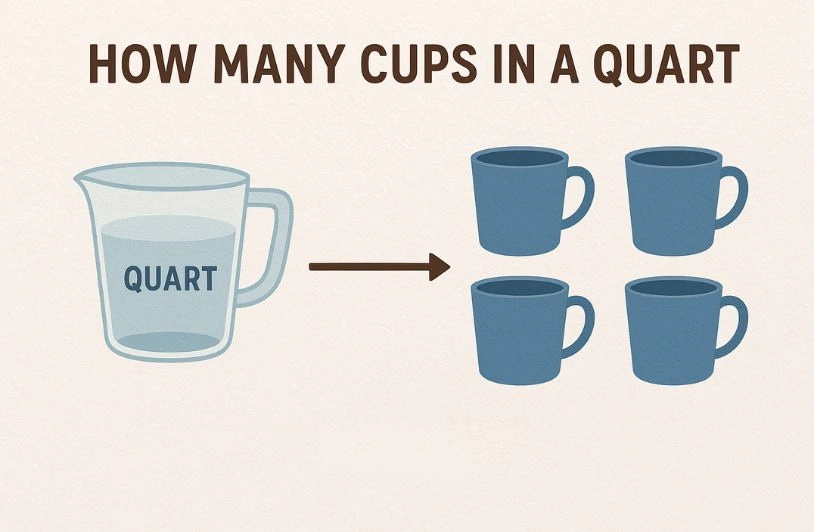
Have you ever been knee-deep in a double-batch of your grandmother’s famous chili or a delicate French custard, only to realize your recipe calls for a quart of broth or milk—but all you have in your drawer is a single, battered measuring cup? That sinking feeling of “Wait, how many of these do I need?” is a kitchen classic. Understanding kitchen conversions is the difference between a culinary masterpiece and a Pinterest fail. The short answer? There are exactly 4 cups in 1 quart. But if you want to stop guessing and start cooking with the precision of a pro, you need more than just a number; you need the right tools and a deep understanding of liquid vs. dry measurement. In this comprehensive guide, we’re breaking down the math, the science, and the must-have equipment to ensure you never ruin a recipe again.
Overview: The Architecture of Kitchen Math
Kitchen measurements in the United States rely on the US Customary System, a framework that can feel like a labyrinth if you don’t know the “rule of fours.” A quart is defined as a quarter of a gallon. This system is hierarchical, moving from the tiny teaspoon all the way up to the gallon.
The quart is the “workhorse” of the kitchen. It’s the standard size for a carton of heavy cream, a large jar of mayonnaise, or a professional-grade saucepan. For the home cook, hobbyist baker, or meal-prepper, mastering the quart-to-cup conversion is the most frequent mathematical hurdle you’ll face. But it’s not just about the math; it’s about the vessel. Using a coffee mug to measure a “cup” for a quart-sized recipe is a recipe for disaster. This review focuses on the Pyrex 3-Piece Glass Measuring Cup Set, the gold standard for achieving the precision we’re about to discuss.
Features: Why Precision Measuring Tools Matter
When answering “how many cups in a quart,” we have to look at how we measure those cups. Not all measuring tools are created equal. Here are the key features of professional-grade measuring sets that help you hit that 4-cup-per-quart mark every time:
- Non-Porous Borosilicate or Tempered Glass: Unlike plastic, high-quality glass doesn’t warp in the dishwasher or absorb odors from your last batch of spicy curry. This ensures that a “cup” remains exactly 8 fluid ounces for the life of the tool.
- Easy-to-Read Graduation Marks: The best tools feature bold red or blue markings in both US Customary (cups, ounces, quarts) and Metric (milliliters, liters). This is vital for “bridging the gap” when using international recipes.
- Integrated Spouts: A feature often overlooked until you’re pouring hot stock. A precision-engineered spout prevents “dribble-back,” ensuring every drop of your measured quart ends up in the bowl, not on the counter.
- Thermal Shock Resistance: Pro-level glass (like the Pyrex set we recommend) can go from the fridge to the microwave without shattering. This is essential when you need to warm a quart of milk for dough.
- Ergonomic Handles: When you are holding a full quart (which weighs roughly 2 pounds), a sturdy, open-handle design allows for a secure grip, even with wet or flour-covered hands.
Benefits: The Science of the Perfect Conversion
Why does knowing there are 4 cups in a quart matter so much? It’s about the Chemistry of Cooking.
- Consistency in Baking: Baking is chemistry. If your recipe calls for a quart of water for bread and you accidentally use 4.5 cups because of poor tools or bad math, your hydration levels will be off, resulting in a gummy, dense loaf.
- Flavor Balance: In soup making, the ratio of liquid to aromatics is key. A quart of stock provides the perfect volume to submerge your vegetables. Knowing the 4-cup conversion allows you to scale recipes up or down without losing the soul of the dish.
- Cost Savings: Buying ingredients in bulk (like a gallon of milk) and converting them into quarts and cups for storage saves significant money over buying individual small containers.
- Time Efficiency: Instead of filling a 1-cup measure four times, using a quart-sized (4-cup) measuring jug allows you to do the job in one single pour. This reduces “measurement fatigue” and speeds up prep time by 75%.
- Professional Results: Pros don’t guess. By using a dedicated 4-cup (1 quart) measuring vessel, you eliminate the margin of error that comes with repetitive pouring.
Pros: Why The 4-Cup Standard Wins
- Universal Standard: In the US, the 4-cup quart is the law of the land, making it easy to follow 99% of cookbooks.
- Scalability: It’s the perfect “middle ground.” It’s easier to double a quart (to get a half-gallon) than it is to multiply dozens of tablespoons.
- Storage Friendly: Most refrigerator door shelves are designed specifically to hold quart-sized containers.
- Health & Safety: Using glass measuring tools for your quarts ensures no BPA or chemicals leach into your hot liquids.
Customer Reviews: What the Pros Are Saying
Note: These insights reflect the general consensus of professional chefs and home bakers using the 4-cup conversion standard with premium tools.
“I spent years using plastic cups that eventually cracked or the numbers rubbed off. Switching to a dedicated glass 1-quart measuring jug changed my baking game. I finally realized my ‘4 cups’ weren’t actually 4 cups. My cakes are finally rising correctly!” — Sarah M., Home Baker
“As a culinary instructor, the first thing I teach is ‘4 cups to a quart.’ But I always tell my students: the math is only as good as the tool. If you’re using a dry measuring cup for a liquid quart, you’re doing it wrong. Invest in a 4-cup Pyrex and your sauces will thank you.” — Chef Julian R.
“The 4-cup measure is the most used item in my kitchen. It’s the perfect size for mixing pancakes, measuring stock, and even watering my indoor plants with precision. Durable and indispensable.” — David L., Meal Prep Enthusiast
Conclusion: Never Guess Again
Whether you are a novice cook or a seasoned chef, the fundamental truth remains: 1 Quart = 4 Cups. But knowledge without the right application is just trivia. To truly master your kitchen, you need to move away from guesswork and embrace the precision of high-quality measuring tools.
Using the right equipment, like a tempered glass 4-cup measuring jug, ensures that your conversions are accurate, your ingredients are safe, and your results are consistent. Don’t let a simple conversion error be the reason your dinner party fails. Equip your kitchen with the standard of the pros and experience the confidence that comes with perfect measurement.
Call to Action: Upgrade Your Kitchen Precision Today!
Ready to stop guessing and start cooking like a pro? Don’t let another recipe fall victim to “guestimation.”This set includes the essential 1-cup, 2-cup, and 4-cup (1 Quart) measures you need for every recipe.
